Arch Dental — General Dentistry, Implants, and Dentures — Andrew Lisy, DMD
Home / Services / General Dentistry
General Dentistry · South Pittsburg, TN

Everyday dentistry, done properly.

Cleanings, fillings, crowns and everything in between. We recommend only the treatment that is actually necessary, and we make sure you understand your options before anything begins.

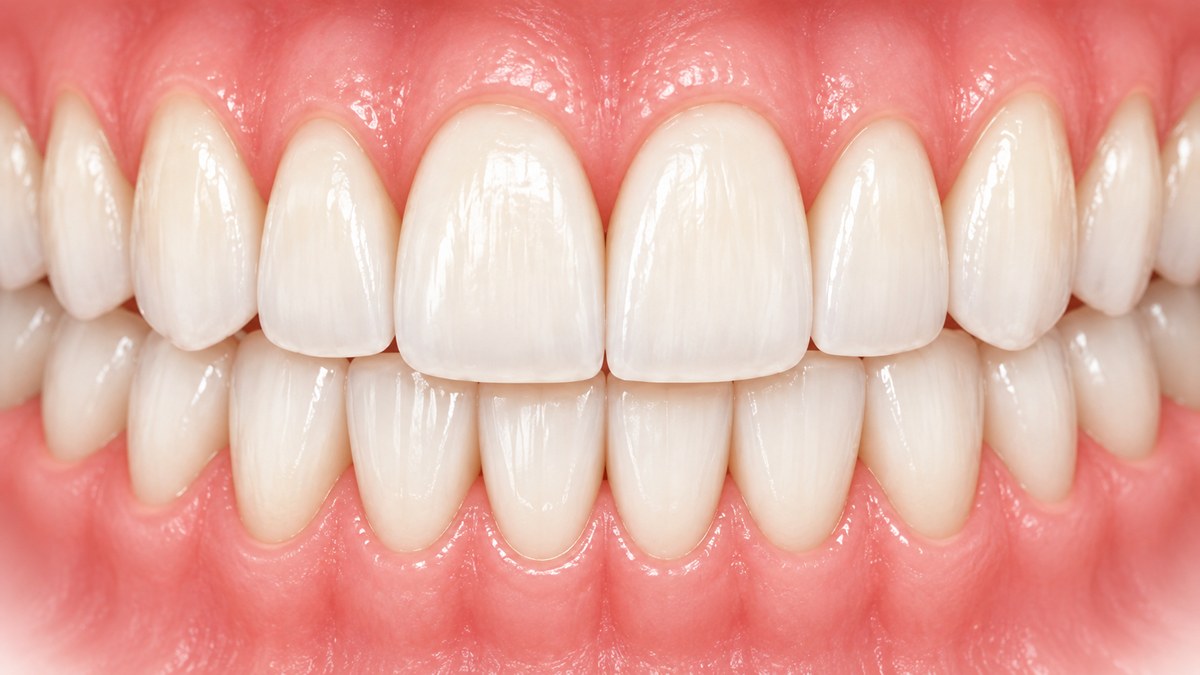
Healthy upper and lower teeth with firm, healthy gum tissue

What we do

Nothing gets recommended without a reason you can see. We will show you the x-ray, the photo or the probe reading behind it.

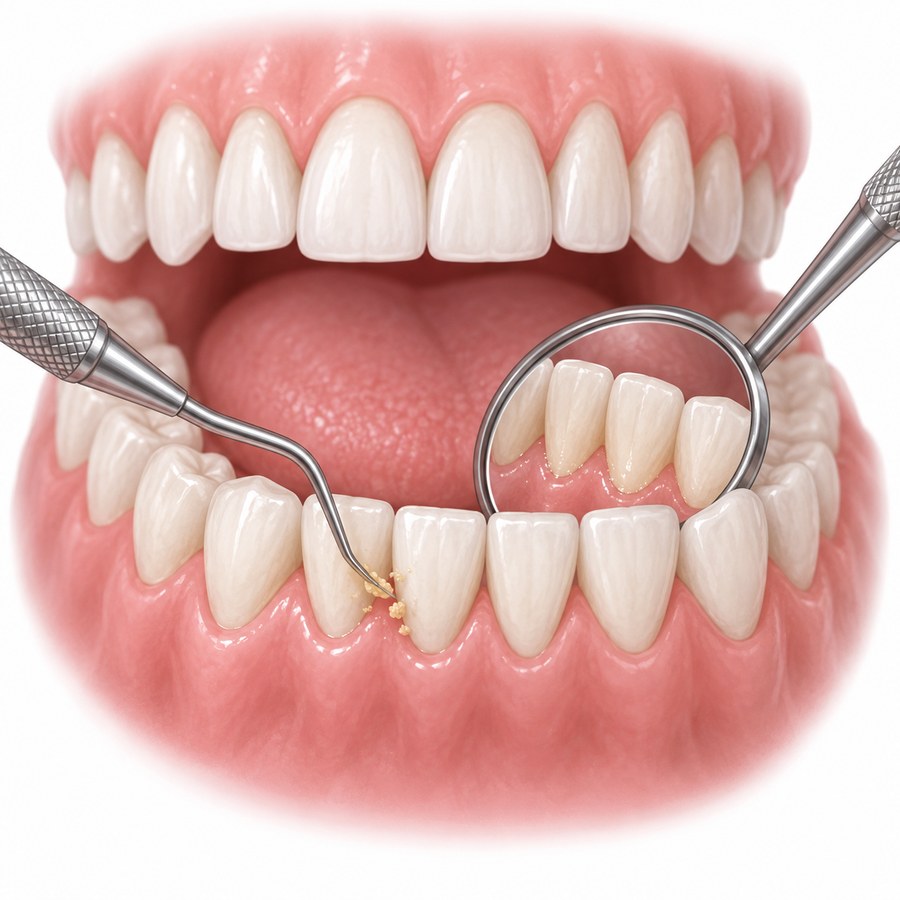
Dental instruments removing tartar from the lower front teeth at the gumline

Cleanings and exams

Tartar hardens onto the tooth and cannot be brushed off, which is why cleanings run on a schedule rather than when you feel like it.

The exam matters just as much. We look for decay while it is still small enough to be a filling, cracks before a cusp breaks off, and gum pockets before they take bone, with an oral cancer screening every visit.

Most people do well every six months. Some need three or four, and we will tell you which you are.
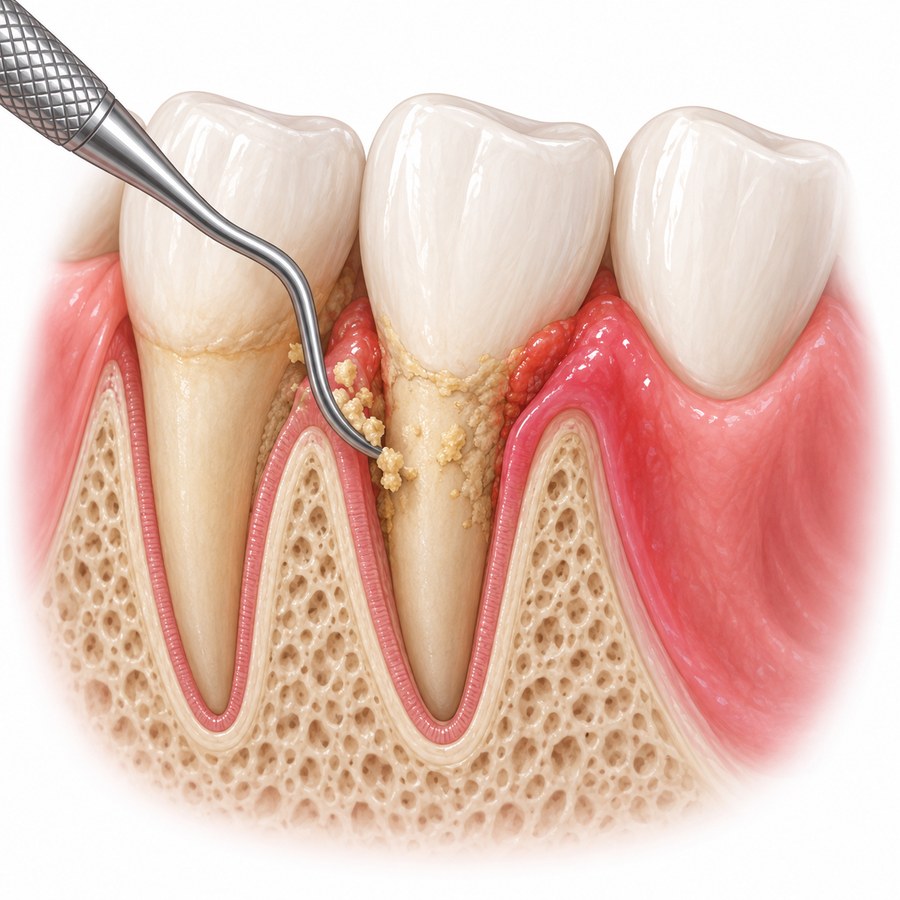
A scaler cleaning hardened tartar from a root surface below inflamed gum tissue

Deep cleaning, or scaling and root planing

When gum disease gets past the gums it starts taking bone, and a pocket opens between the tooth and the jaw. Tartar packs into that pocket where no brush reaches.

A deep cleaning cleans the root surface below the gumline, usually with the area numbed and usually over two visits. We measure every pocket first.

Bone that is already gone does not grow back. A deep cleaning stops the bleeding and halts the loss where it is, which is why we would rather find it early.

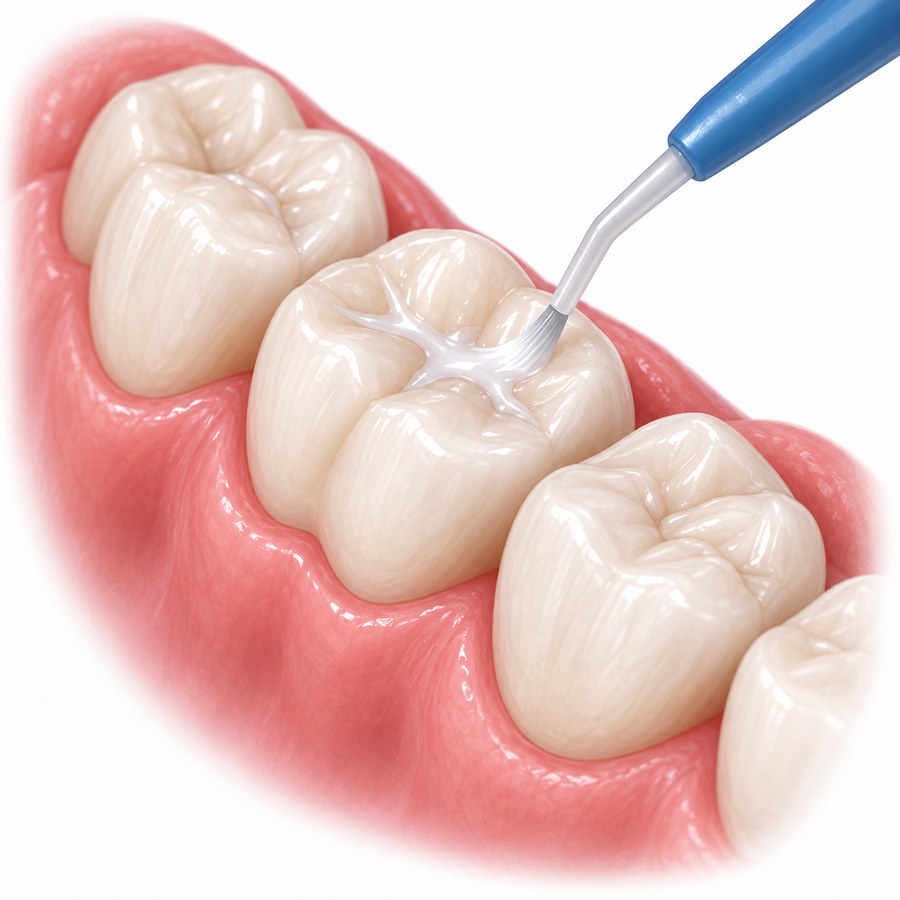
A sealant being flowed into the grooves on the chewing surface of a molar

Sealants

The chewing surface of a back tooth has grooves that are often deeper and narrower than a toothbrush bristle. That is where most childhood cavities begin, and it has little to do with how well a child brushes.

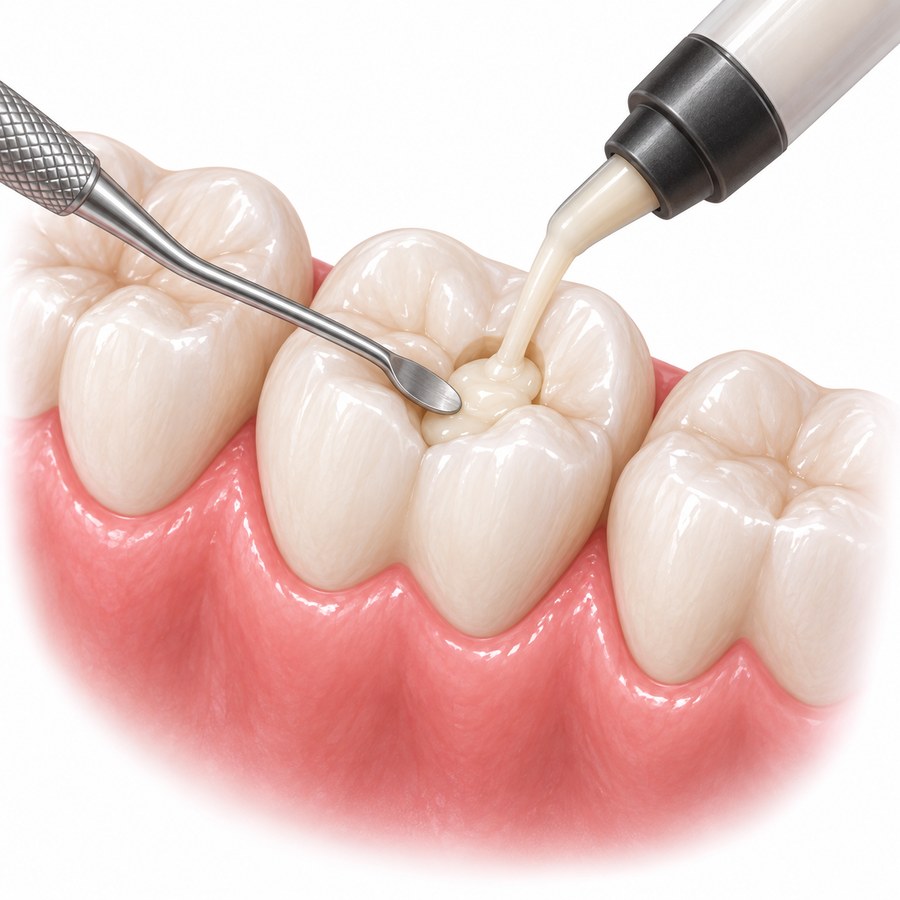
A sealant flows into those grooves and sets, turning the surface into something a brush can actually clean. No drilling, no numbing, a few minutes per tooth.

Tooth-colored composite being placed into a prepared cavity in a molar

Fillings

Decay is removed and the space rebuilt with tooth-colored composite, bonded to what is left and shaded to your tooth. Because bonding holds it in place, we remove less healthy structure than older materials required.

The limit worth knowing: a filling is only as strong as the tooth around it. Once the walls are thin, filling it just sets up a fracture later.

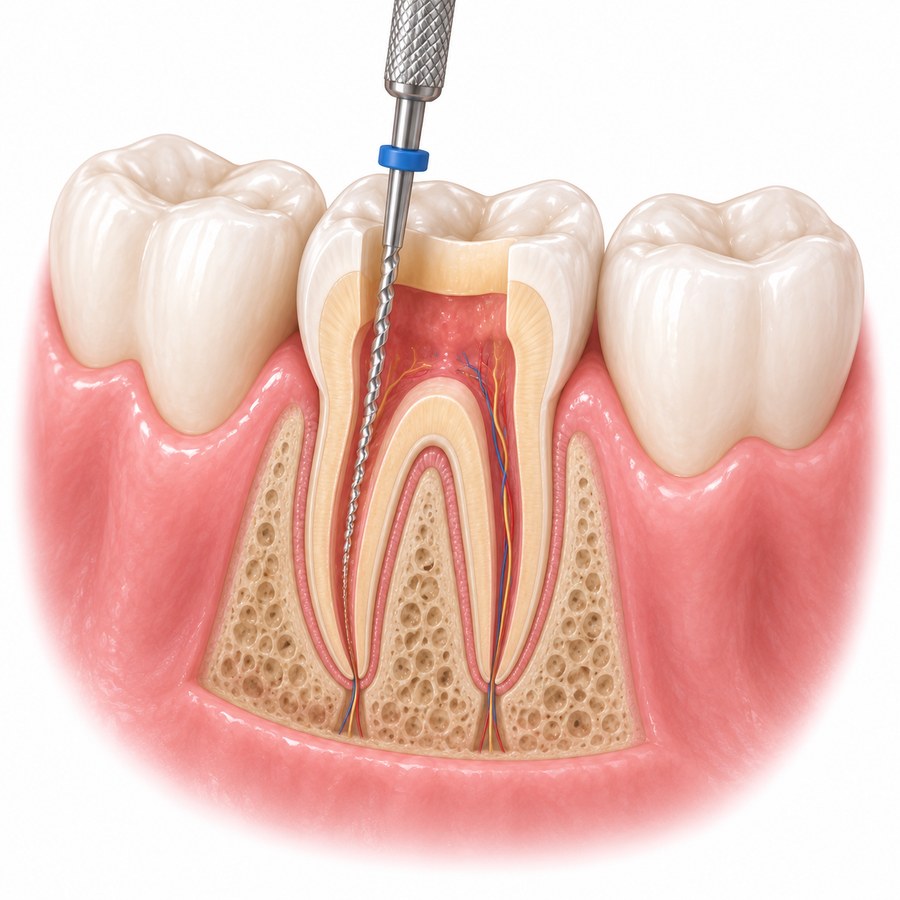
A file cleaning the canal inside a molar, shown in cross-section

Root canal therapy

When decay or a crack reaches the nerve inside a tooth, the nerve does not recover on its own. A root canal removes it, cleans and disinfects the canals, and seals them — which keeps the tooth rather than losing it.

It has a worse reputation than it deserves. With proper anesthetic most patients describe it as no different from having a filling done, and the ache they arrived with is gone afterward.

A back tooth almost always needs a crown afterward. Removing the nerve leaves the tooth more brittle, and covering it is what stops it splitting later.

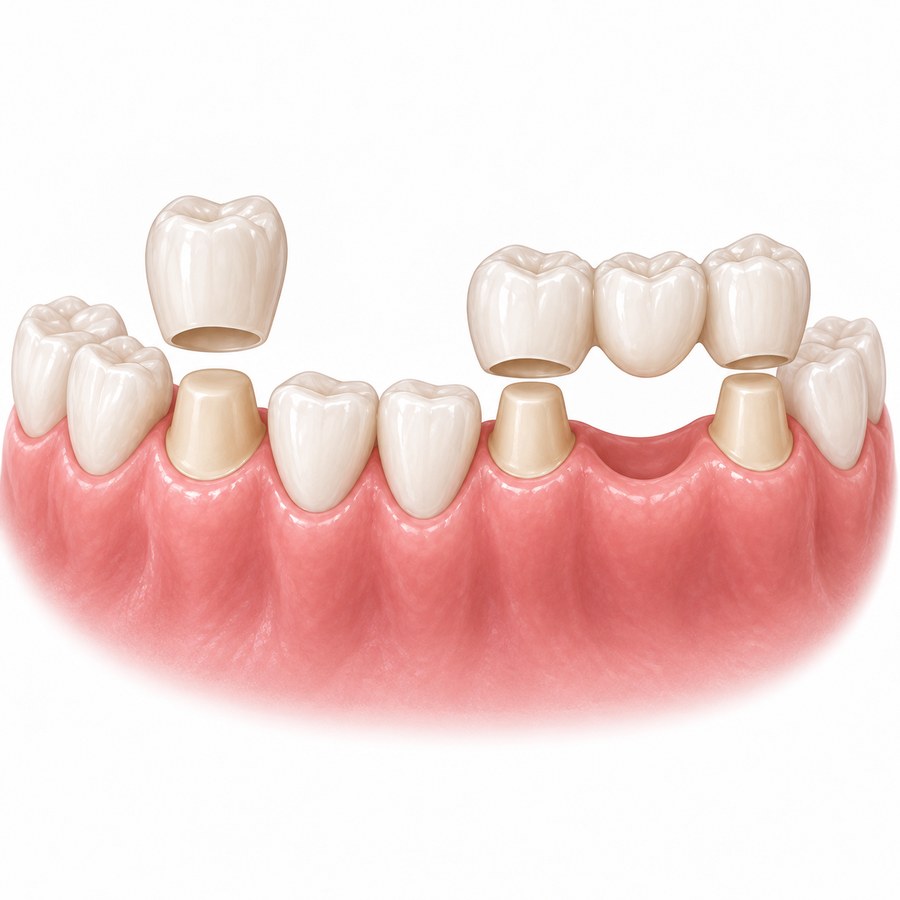
A single crown and a three-unit bridge above prepared teeth on the lower arch

Crowns and bridges

A crown covers the whole tooth rather than filling a hole in it. It is what a tooth needs when there is not enough structure left to hold a filling safely, such as a large old restoration failing or a fractured cusp.

A bridge replaces a missing tooth by joining crowns on the teeth either side, with a replacement tooth suspended between them. It is fixed, and it fills the gap without surgery.

A bridge does mean preparing two neighboring teeth. If those teeth are healthy, a single implant leaves them alone and usually lasts longer. Ask us about both before you decide.

Only what you actually need

Overtreatment is a real problem in this profession. We would rather you leave understanding your options than agreeing to a plan you were talked into.

You see what we see

Photographs and x-rays on the screen in front of you. If we say a tooth is cracked, you get to look at the crack.

Watching is a real option

Not every spot needs drilling today. Some get monitored and re-checked, and we will tell you when that is the better call.

Your options, laid out

What is urgent, what can wait, and what is optional — with the trade-offs for each. The decision is yours to make.

Questions patients actually ask

Do I really need a cleaning every six months?

Most people do. Gum disease history, smoking, diabetes and how quickly you build tartar can all shorten the interval. We will tell you which you are based on your pocket readings, not on a policy.

My tooth does not hurt. Why does it need a filling?

Pain is a late symptom. Decay does not hurt until it reaches the nerve, and by then a filling is usually off the table.

Is a deep cleaning just an expensive regular cleaning?

No. A regular cleaning removes deposits from the visible tooth and just under the gumline. A deep cleaning goes down the root surface inside a periodontal pocket, usually numbed. It is only appropriate when there are pockets and bone loss to justify it, and we will show you the chart.

Can I get a white filling instead of silver?

Yes, and it is all we place.

Should I get a bridge or an implant?

It depends on the teeth beside the gap. If they are healthy, an implant leaves them alone and is usually the better long-term answer. If they already need crowns, a bridge does two jobs at once.

Start with an exam

A new patient visit is an exam, x-rays, a periodontal charting and a cleaning, with everything we find shown to you on screen before any treatment is proposed.

Treatment recommendations depend on individual findings. Whether a tooth can be restored with a filling, needs a crown, or requires further treatment is determined by clinical examination and radiographs. Longevity figures reflect typical outcomes and are not a guarantee.