Arch Dental — General Dentistry, Implants, and Dentures — Andrew Lisy, DMD
Home / Services / Dentures & Implants
Dentures & Implants · South Pittsburg, TN

Teeth you can actually eat with.

There are four honest ways to replace a full arch of teeth. They do not cost the same, and they do not work the same. This page explains all four, shows you the prices, and tells you which one Dr. Lisy would want for his own family.

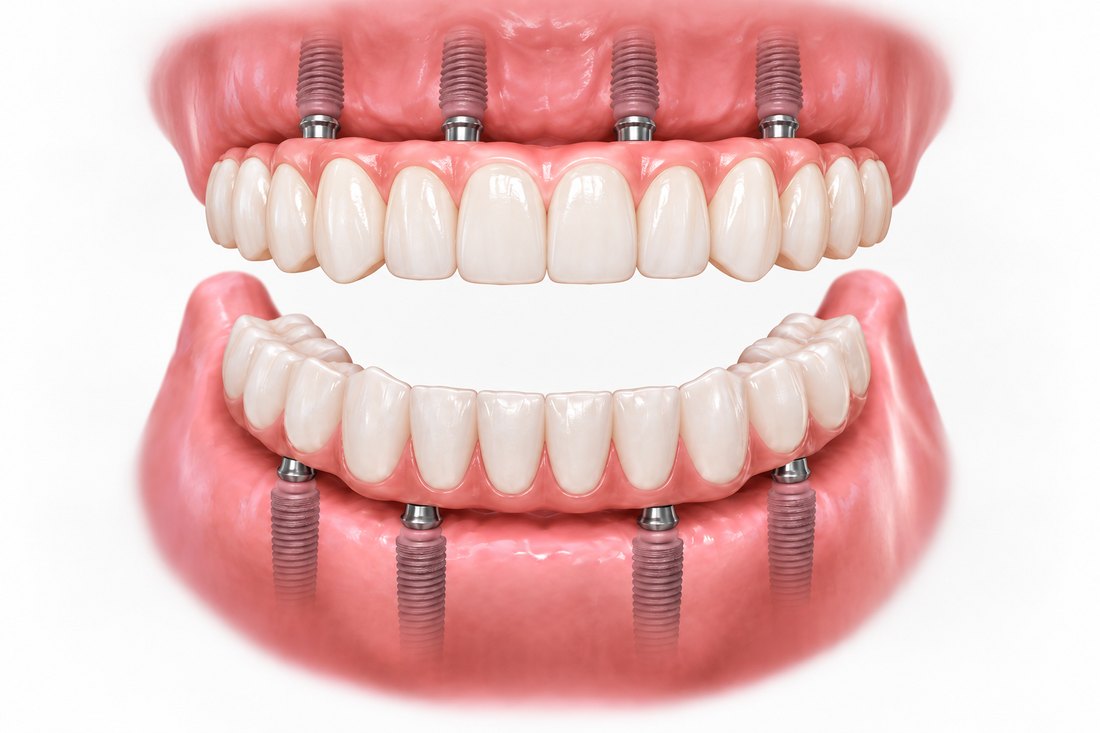
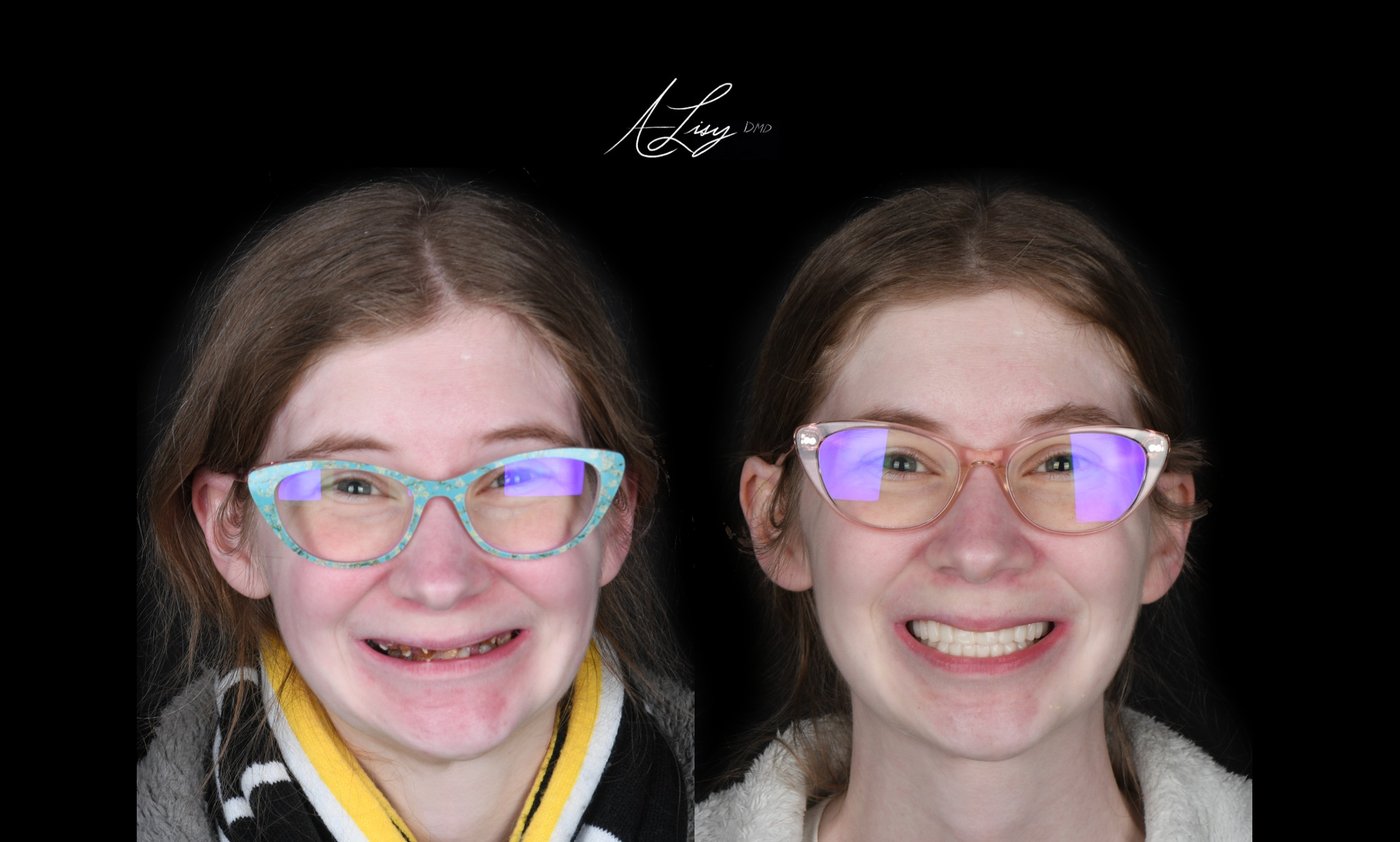
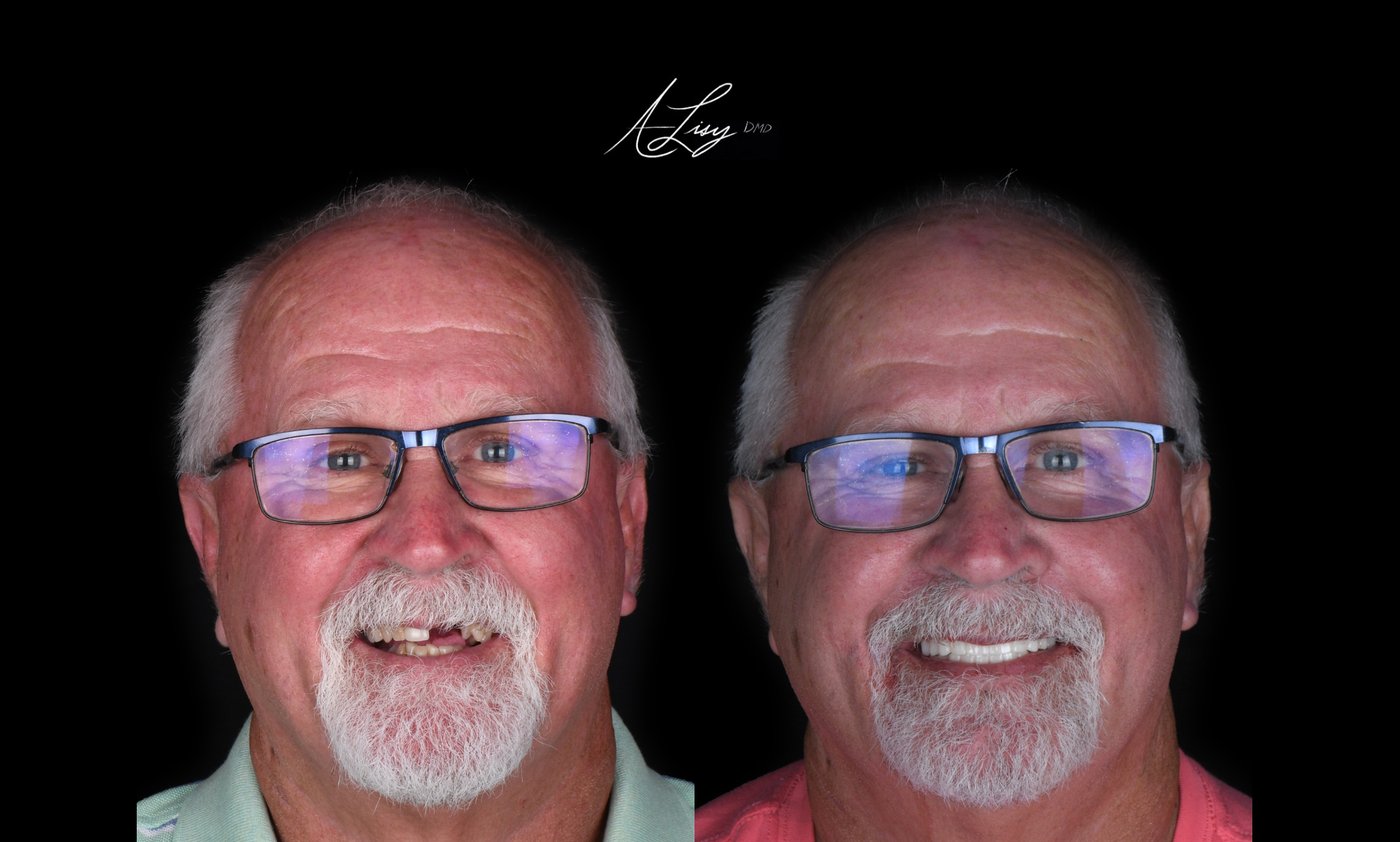
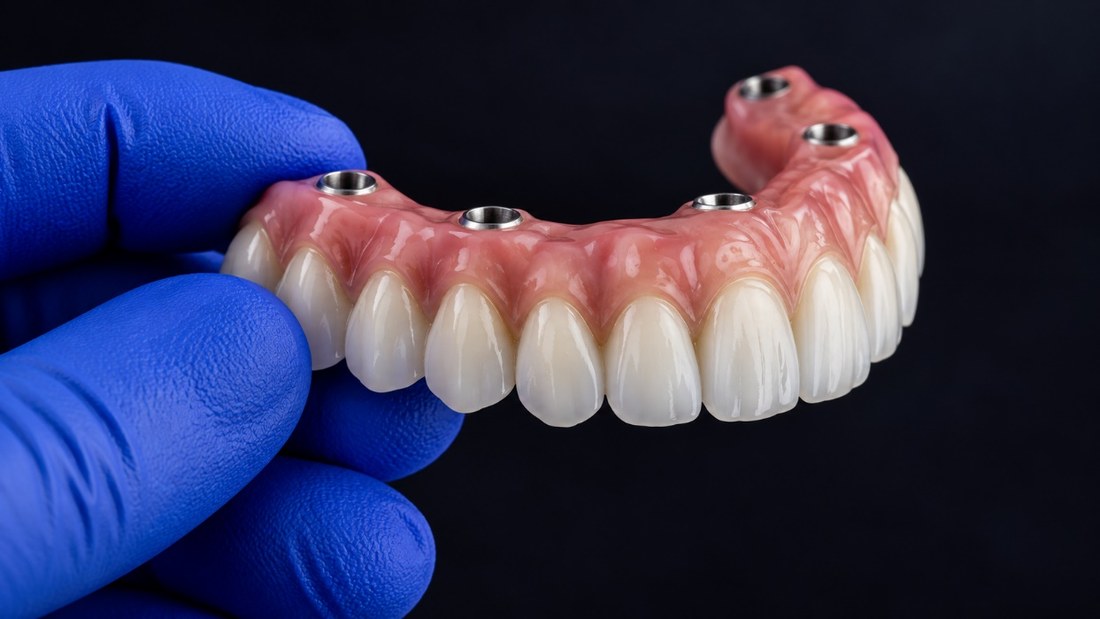
A finished fixed full-arch prosthesis showing its implant connections
A fixed arch anchors into bone the way roots did. Nothing rests on your gums, and nothing comes out.

Why a lower denture never quite behaves

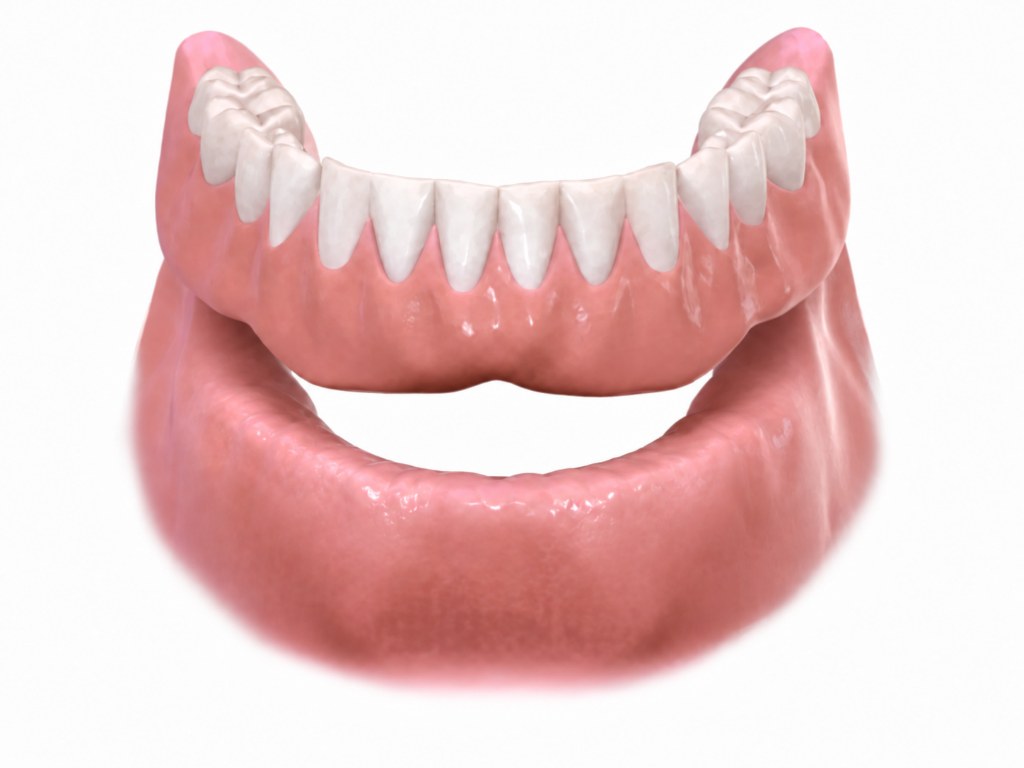
The lower denture balances on a narrow horseshoe of bone, with your tongue pushing from inside and your cheeks from outside. Every swallow can lift it. Every sentence can shift it. And unfortunately, it gets worse over time. The bone underneath keeps shrinking, so there is less to hold onto. A way to get by, not a long-term solution.

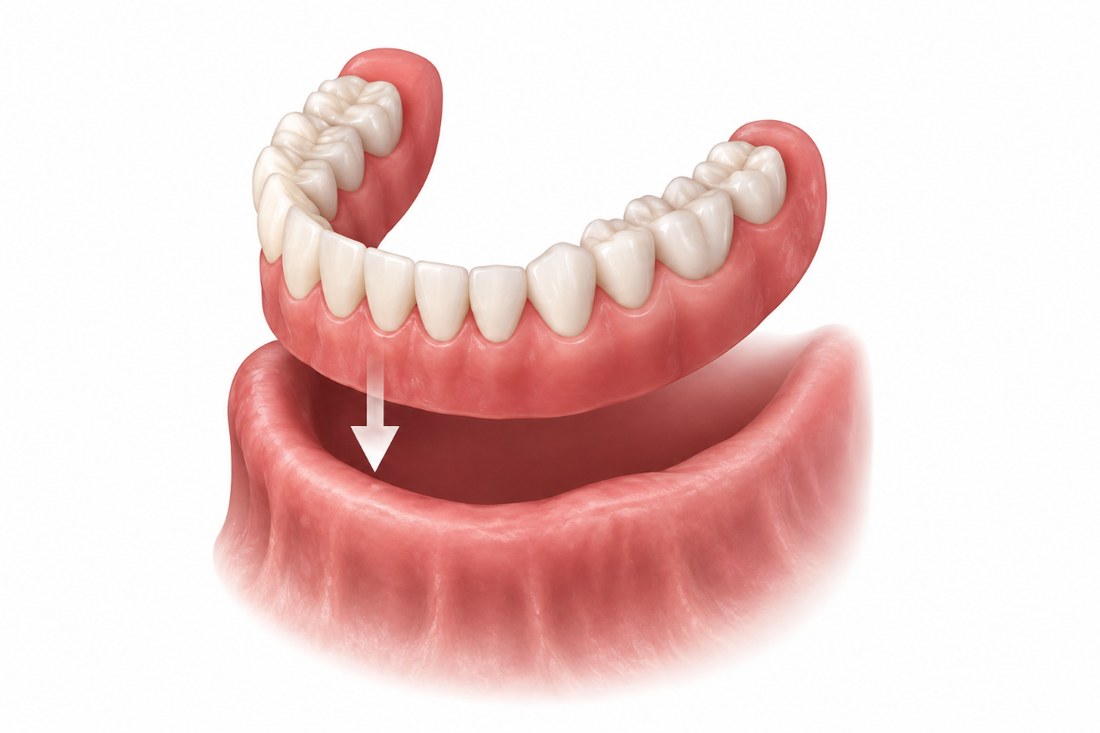
A lower denture lifting away from the gum ridge it rests on
The lower denture is squeezed between the tongue and the cheeks with no seal to resist them.

How much of your bite you get back

However, implants change this dilemma completely.

This is the part most people are never told. The four options are not four flavors of the same result. There is a big difference in function and feel.

Full denture $4,500 10 Snap-in, 2 implants $6,000 24 Snap-in, 4 implants $8,000 40 Fixed full arch $18,000 per arch 72 Natural teeth for reference 100 Maximum bite force, indexed to natural teeth = 100
Figures follow the functional gradient reported in the Journal of Prosthodontics (2025).

Your four options, priced openly

Every price below is the full fee for the work listed. Dr. Lisy performs the surgery and delivers the final teeth himself, so there is no second office, no second doctor and no second bill. We have bundled pricing which many times is less than what you would pay if we filed your insurance. We also have financing options available with affordable monthly payments!

Full upper and lower dentures resting on the gum ridges

Full denture, upper and lower

The starting point. We remove what needs to come out, let the tissue settle, and build a well-made set of dentures. It typically takes about 3 months for your bone and gums to heal after extractions, and a reline or new denture may be needed for better support and retention.

Choose this if cost is the deciding factor right now, or if health issues make surgery unwise. Although better at time of extractions, implants are usually able to be added later on.

$4,500
both arches, all in
  • All needed extractions
  • Upper immediate denture
  • Lower immediate denture
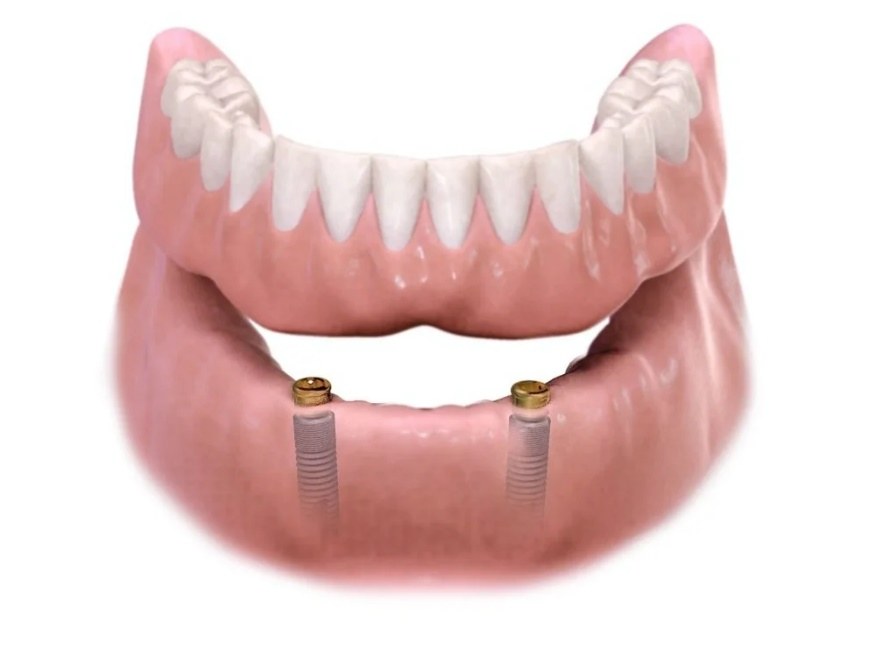
A lower denture above two implants with snap attachments

Snap-in lower denture, 2 implants

Two implants go into the front of the lower jaw, where the bone is densest and most reliable. After 3–4 months of healing, two attachments go into the denture. It clicks down and stays down. Chewing roughly doubles. A new denture or reline may be needed depending on healing after extractions.

Be clear about the limit: two implants stop the denture from lifting and sliding, but the back of it still rests on gum. Some patients can get a small amount of rocking and movement on the back teeth.

$6,000
per the package listed
  • All needed extractions
  • 2 implants, lower jaw
  • 2 snap attachments
  • Upper immediate denture
  • Lower immediate denture
  • 3D scan and surgical planning
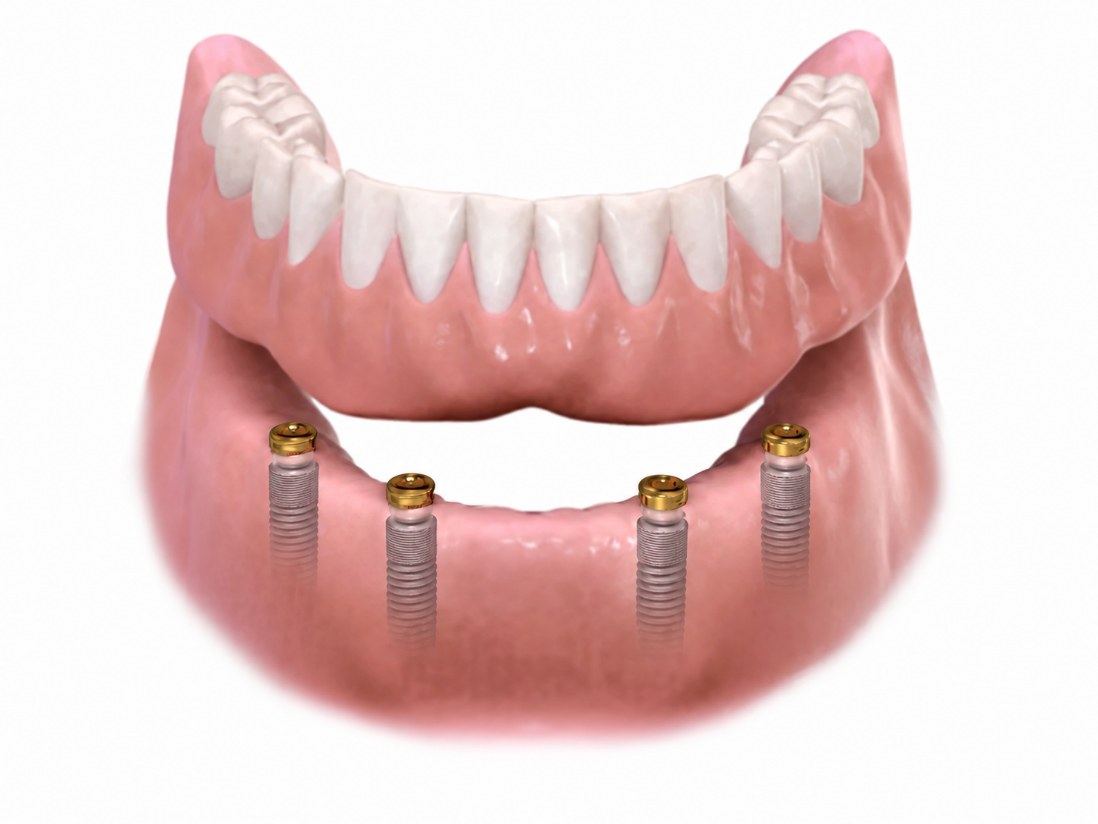
A lower denture above four implants with snap attachments

Snap-in lower denture, 4 implants

Four implants instead of two moves the support out toward the back corners of the jaw, which is where a two-implant denture still flexes.

Sore spots largely stop happening and chewing roughly quadruples over a plain denture. Similarly, a new denture or reline may be needed depending on healing after extractions.

This is the best removable option there is, and for a patient who genuinely wants to take their teeth out at night it is the one to pick. It still comes out, and the nylon inserts still wear and need changing once or twice a year.

$8,000
per the package listed
  • All needed extractions
  • 4 implants, lower jaw
  • 4 snap attachments
  • Upper immediate denture
  • Lower immediate denture
  • 3D scan and surgical planning

Side by side

Nothing here is hidden in a footnote. If a column has a weakness, it is in the column.

Full denture Snap-in, 2 Snap-in, 4 Fixed arch
Chewing, vs natural teethAbout a tenthRoughly double a dentureRoughly quadruple a dentureAbout seven times a denture
Stays putAdhesive, most daysFront anchored, back can rockStable across the archScrewed down permanently
Comes outYesYesYesNo — only in the office
Covers the palateYes, full coverageYes on the upperYes on the upperNo palate at all
Protects jawboneNo — ridge keeps shrinkingAt the implant sitesAcross more of the archBest bone preservation
Sore spotsCommonReducedUncommonNothing rests on gum
Ongoing upkeepRelines, remakesInserts 1–2× a yearInserts 1–2× a yearCleanings, no inserts
Fee$4,500 both arches$6,000$8,000$18,000 per arch
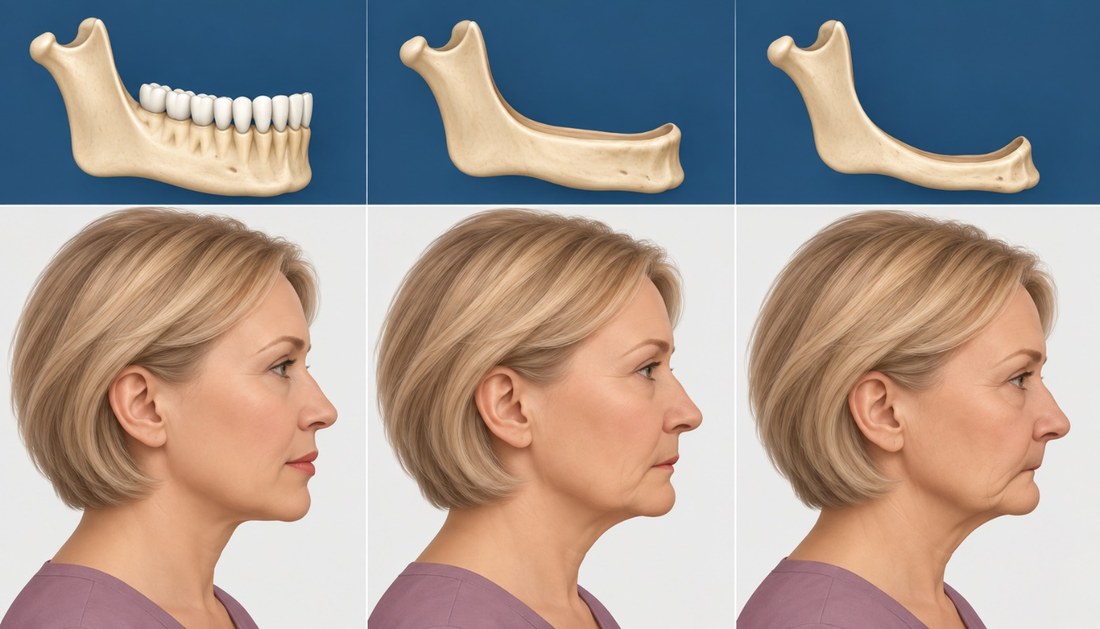
Jawbone loss after tooth loss and its effect on the facial profile
Ridge resorption is progressive and it does not pause. Implants interrupt it by putting load back into the bone.

What it does to your face

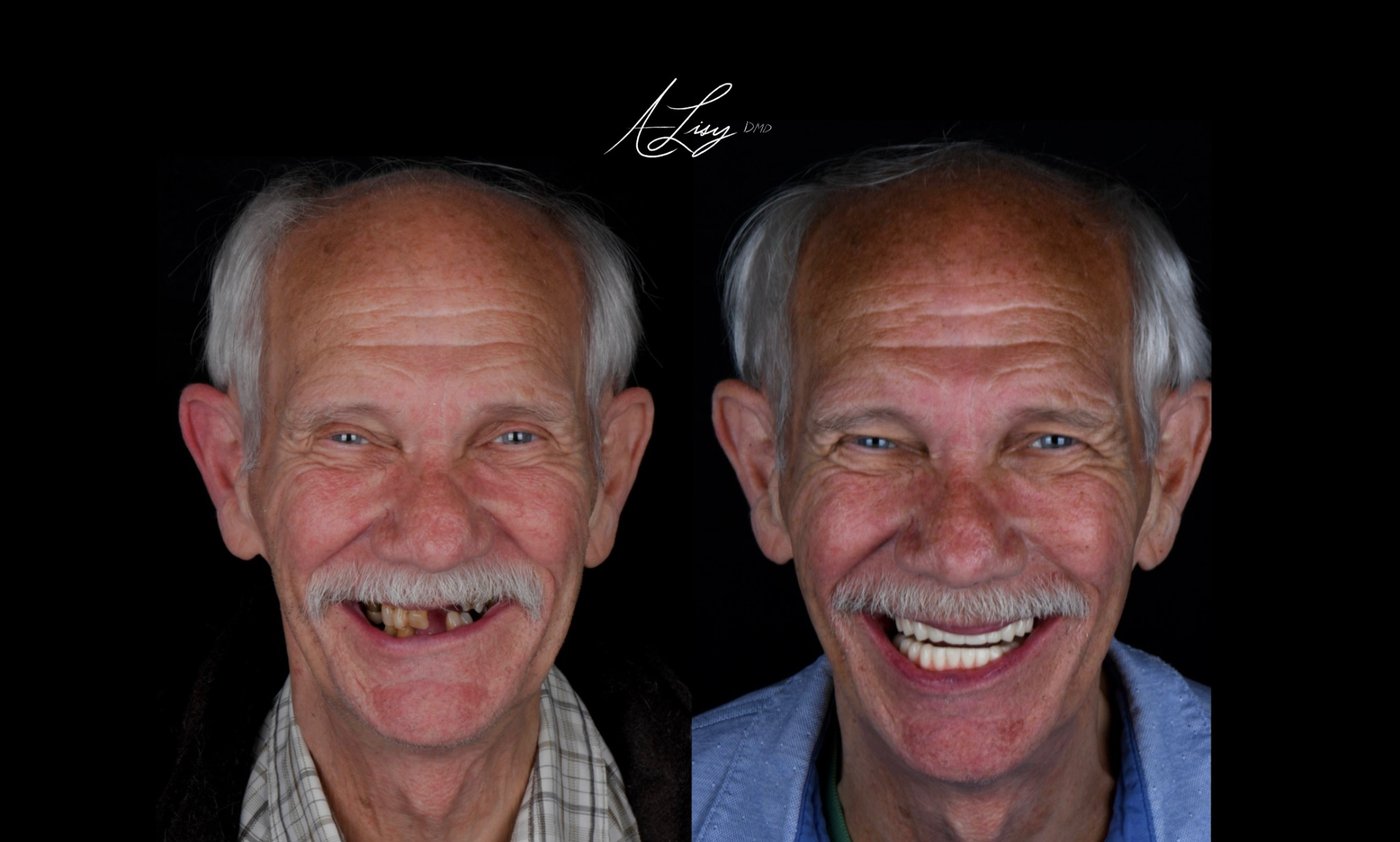
The lower third of your face is held up by bone and teeth. Take the teeth away and the ridge recedes, the distance from nose to chin shortens, the lips roll inward and the chin rotates forward. It reads as age, and it is why long-term denture wearers can look a decade older than they are.

A well-designed prosthesis puts that height and lip support back. We set the tooth position, the amount of tooth that shows when you talk and the fullness under the lip deliberately, for your face — not to a lab average. You will see the setup in wax or in a printed try-in and approve it before anything is final.

Implants add the part a denture cannot: they keep loading the bone, so the foundation you rebuild on is far more likely to still be there in fifteen years.

Who is doing the surgery

Full-arch work is one of the harder things in dentistry to do well, and there is a real gap between an office that offers it and an office that does it regularly.

Dr. Andrew Lisy completed an Advanced Education in General Dentistry residency dedicated to exactly this work — implant surgery, All-on-X full-arch reconstruction, bone grafting and augmentation, and full-mouth rehabilitation. He also teaches, supervising residents in the same procedures.

He places the implants and he delivers the final teeth. That matters more than it sounds. When one person owns both halves, the implants get positioned for the prosthesis that is actually being built — not left for someone else to work around later.

  • AEGD residency in advanced implant surgery and full-arch reconstruction
  • Surgery and final restoration performed by the same doctor, in one office
  • 3D CBCT imaging and guided planning on every full-arch case
  • Full-size titanium implants only — no mini implants for full-arch work
  • Sedation options available for anxious patients
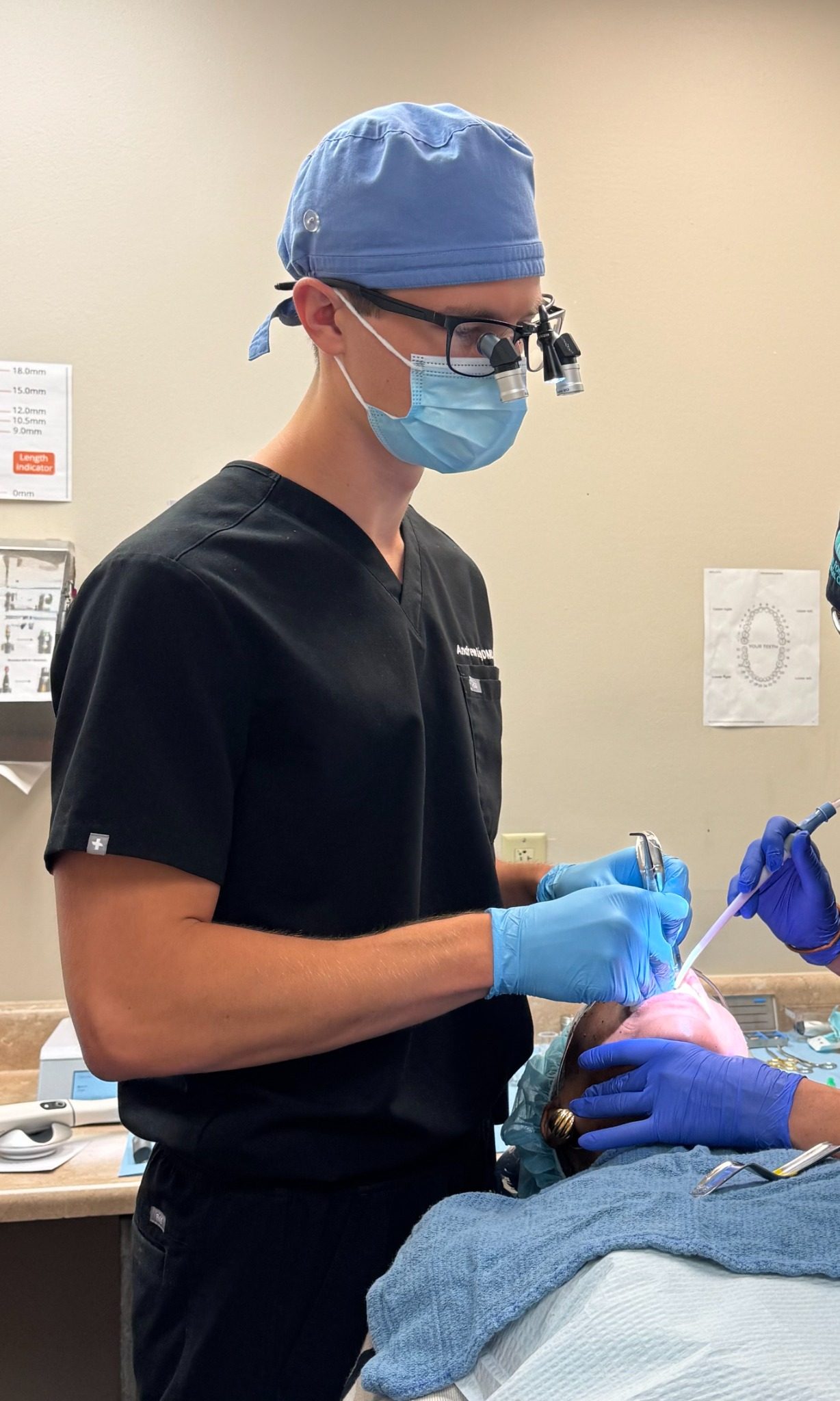
Dr. Andrew Lisy performing a procedure

Questions patients actually ask

How much do dentures and full-arch dental implants cost in South Pittsburg, TN?

Arch Dental lists its fees openly: full dentures are $4,500 for both arches, snap-in dentures on 2 implants are $6,000, snap-in dentures on 4 implants are $8,000, and a fixed full arch (All-on-X) is $18,000 per arch. All needed extractions are included in these fees. Bone grafting, sinus augmentation and sedation are additional when required. Financing is available.

Do you offer All-on-4 or All-on-X fixed teeth in South Pittsburg, TN?

Yes. Dr. Andrew Lisy offers a fixed full arch (All-on-X) in South Pittsburg: a permanent set of teeth screwed down onto implants, with no palate coverage and nothing to take out at home. A temporary fixed arch is placed on the day of surgery.

Will I ever be without teeth?

No. Immediate dentures (or, with the fixed option, a temporary fixed arch) are fitted the same day your teeth are removed, before you go home, and you wear them throughout healing.

I have worn dentures for years. Is it too late for implants?

Often not. Long-term denture wearers have lost ridge height, but the 3D scan tells us what is there. Where bone is thin there are still routes forward — grafting, longer or angled implants, or a different implant position. We will tell you honestly what your scan shows.

Can I snap my new teeth onto the implants the day they are placed?

Not usually. The implants need to fuse to the bone first, which takes three to six months. Rushing that is how implants fail. You wear an immediate denture during healing.

Does it hurt?

The procedure itself is done fully numb, with sedation if you want it. Expect soreness and swelling for several days afterward. Patients are often surprised by how mild the recovery turns out to be, and that is especially true of the fixed arch. Pain medication is prescribed either way.

Do you use mini implants?

Not for full-arch work. Full-size titanium implants have decades of evidence behind them and far better long-term outcomes. If another office is proposing mini implants as a permanent full-arch solution, get a second opinion.

Can implants fail?

Yes, though modern implants succeed well over 95% of the time. Smoking and uncontrolled diabetes are the two biggest risk factors, and we will be direct with you about both before you start.

Find out which option your bone will support

A consultation with Dr. Lisy includes a 3D scan, a straight answer about what is possible, and written pricing before you leave.

Fees shown reflect the specific packages described and are honored as listed. All needed extractions are included in the fees shown. An upper and a lower immediate denture are included with the full denture, snap-in (2 implants) and snap-in (4 implants) options. With those three options, a final denture may need to be fabricated and purchased depending on how you heal. Bone grafting, sinus augmentation and sedation are additional when required and will be presented in writing before treatment begins. Individual results vary; the option that is right for you depends on your bone, your health and your goals.