Arch Dental — General Dentistry, Implants, and Dentures — Andrew Lisy, DMD
Home / Services / Cosmetic Dentistry
Cosmetic Dentistry · South Pittsburg, TN

The right option depends on what you want to change.

Whitening, bonding and veneers each do something different, and the best choice depends on your goals, your teeth and how much you want to change. We will walk you through all of them and tell you which one fits.

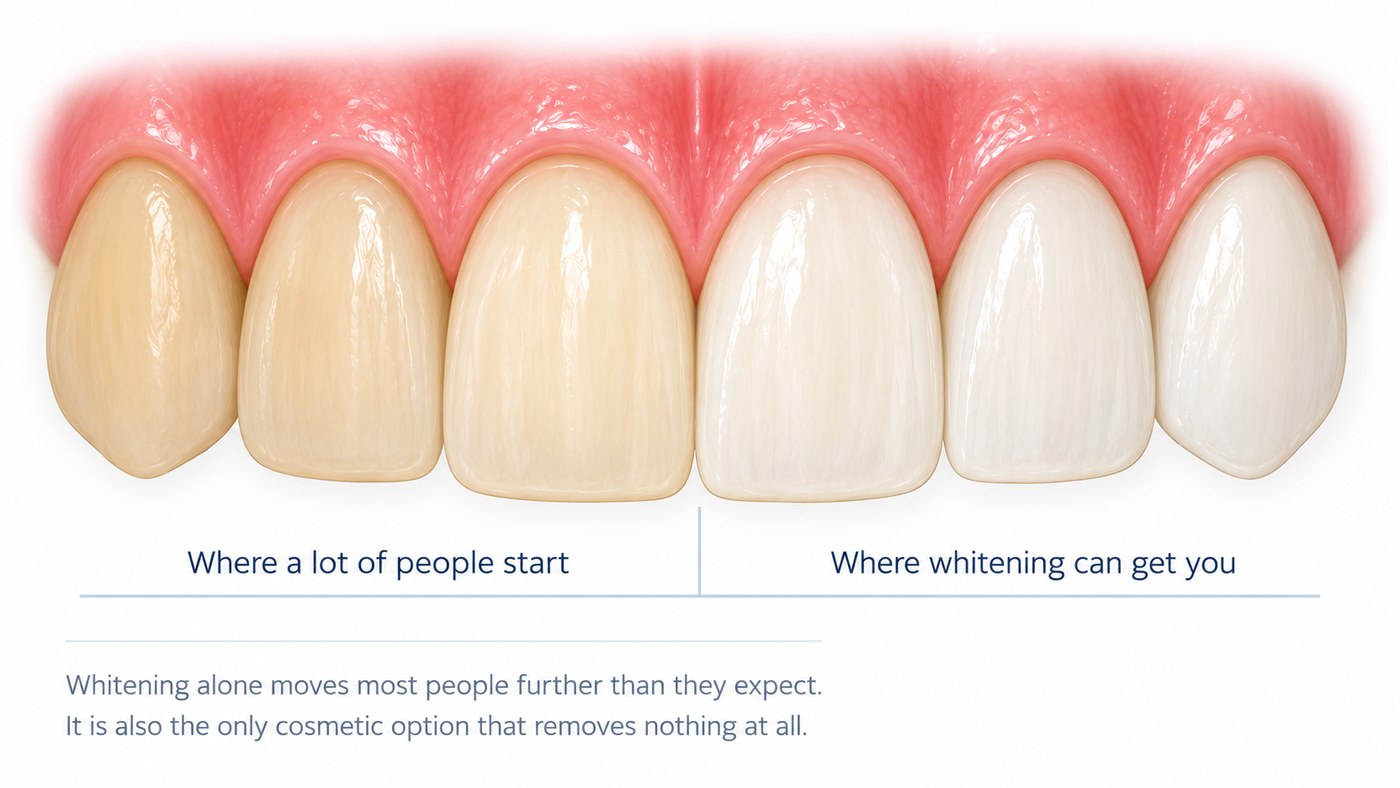
Six front teeth shading from yellow on the left to bright white on the right, showing the range whitening covers

What each option involves

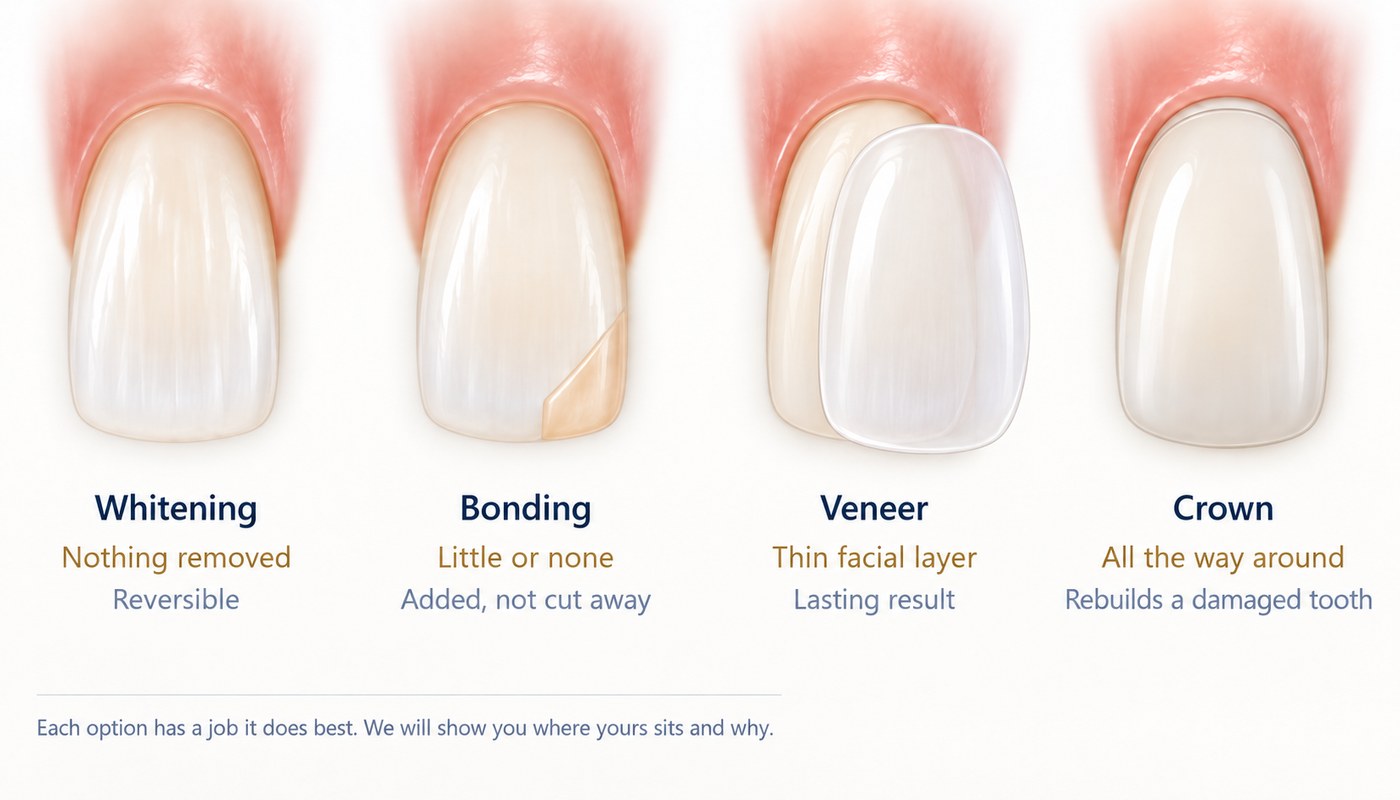
They differ in how much of the tooth is involved, and that is a trade-off rather than a verdict. More preparation buys more change — a bigger shift in shape, shade and alignment than whitening or bonding can deliver.

Four front teeth compared: whitening, bonding, veneer and crown, with how much of the tooth each involves
Conventional tray Saliva dilutes the gel in about half an hour Sealed tray Gel stays sealed away from saliva 0 5 hrs 10 hrs Hours of active whitening per application

Whitening with KöR

Most whitening disappoints because the gel stops working long before you take the tray out. Saliva seeps in and neutralizes the peroxide, so a tray worn all evening did its real work in the first half hour.

KöR trays seal at the gumline so saliva stays out, and the gels are refrigerated so they arrive at full strength. The manufacturer reports six to ten hours of active whitening per application, against roughly twenty-five to thirty-five minutes for a conventional tray. A desensitizer is built in from the start, which is what stops most people quitting halfway.

Whitening cannot change the color of existing crowns, veneers or fillings. If you have restorations in your smile line, matching them is part of the plan.
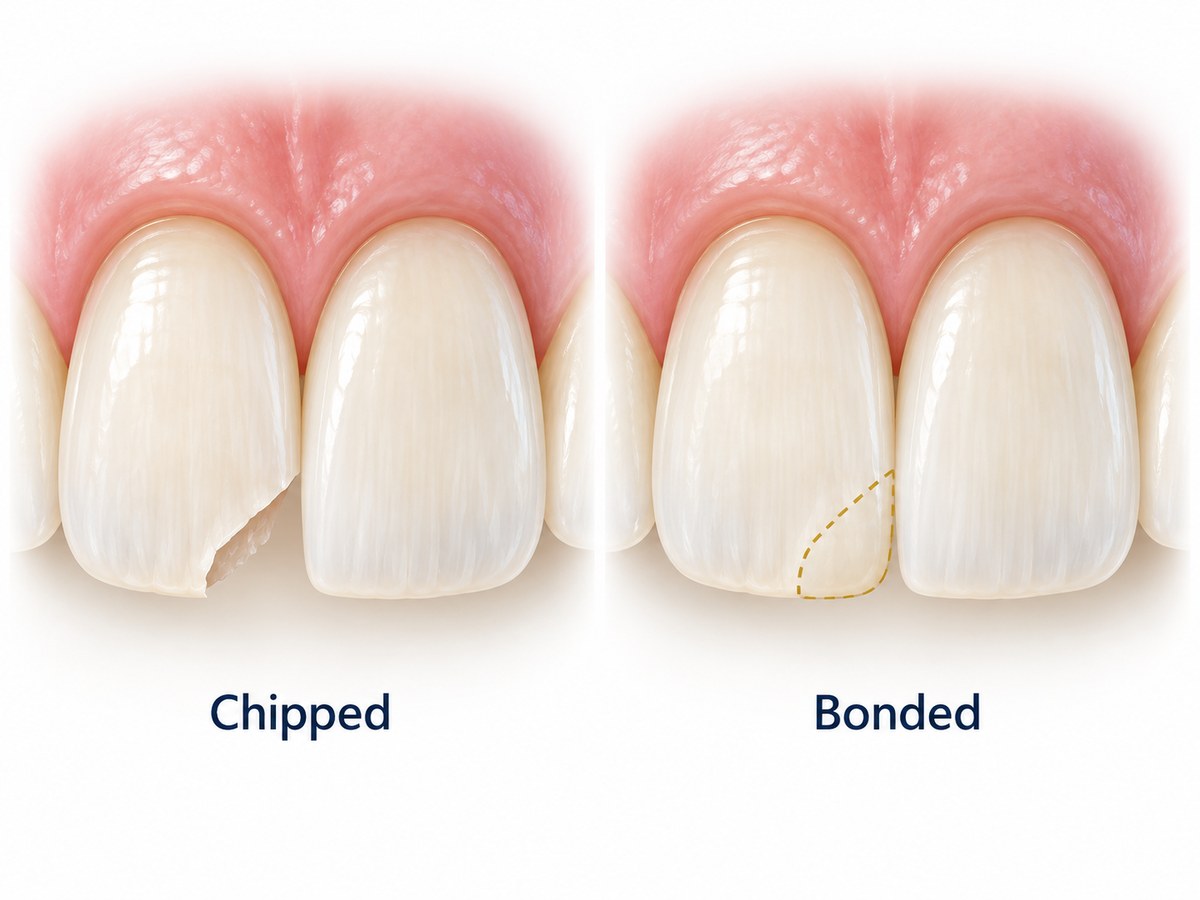
A chipped front tooth on the left and the same tooth rebuilt with composite bonding on the right

Composite bonding

Tooth-colored composite is sculpted directly onto the tooth and polished in the same appointment.

It can handle a chipped corner, a gap between the front two, a worn edge, an old gray filling at the margin. Because material goes on rather than enamel coming off, it can be adjusted or removed entirely later.

Composite is not ceramic. It stains over time and chips more easily on a heavy bite, and it may need refreshing in a few years. For many people that trade is well worth making.

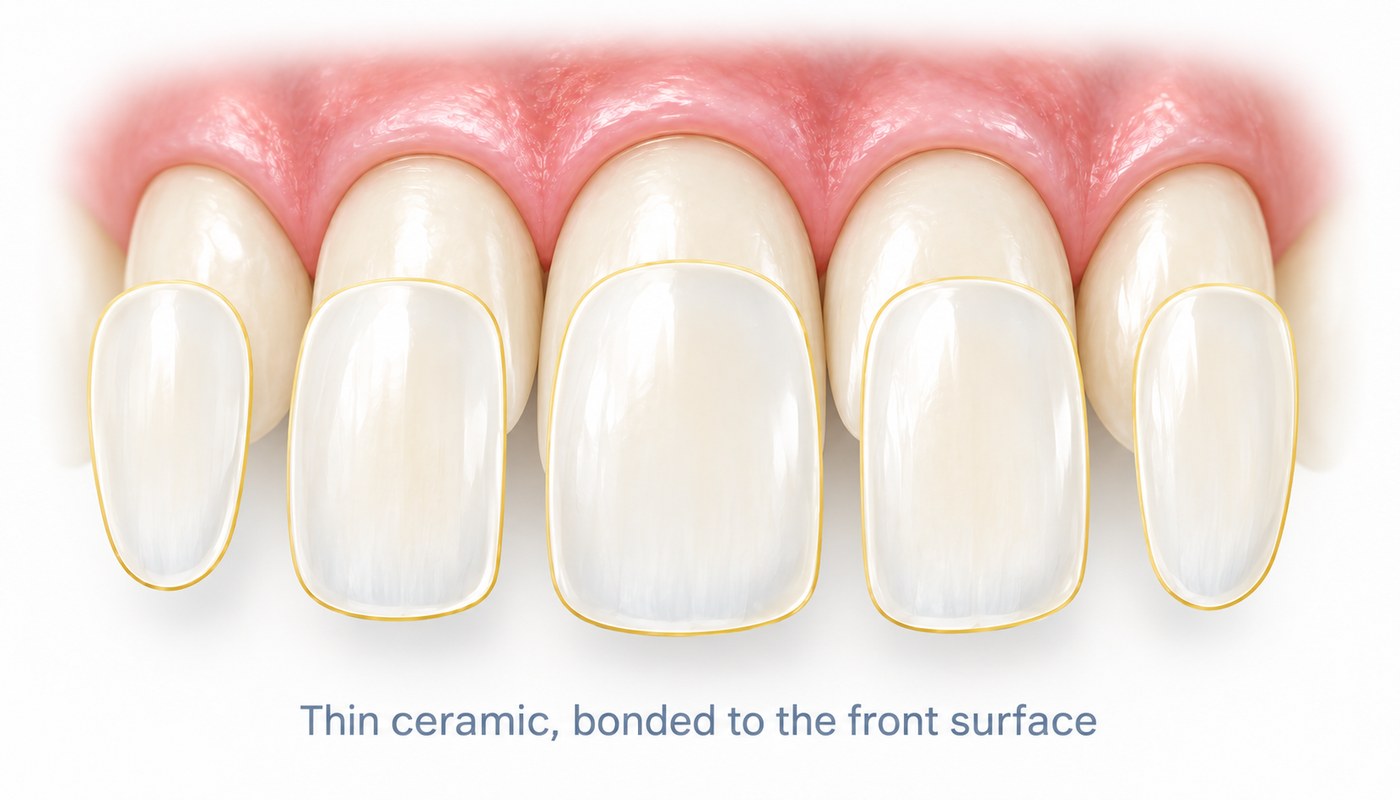
Six front teeth with thin ceramic veneers bonded to the front surfaces

Veneers

Thin shells of porcelain or lithium disilicate bonded across the front of the teeth. Made in a lab rather than sculpted in your mouth, ceramic holds color and polish far better than composite.

Veneers are the right answer when the change you want is bigger than bonding can carry gracefully — several teeth at once, a shade whitening will not reach, teeth worn short across the front, or a smile line that needs redesigning rather than repairing. For a full smile makeover, this is usually the option that gets you there.

Worth knowing before you commit: preparing a tooth removes enamel, so from then on it carries a veneer. If you grind, a nightguard is part of the plan.

Which one fixes what

A starting point, not a rule. What suits you depends on your goals as much as your teeth, and we will go through it with you.

What is bothering youUsually the answerWhy
Teeth are yellow or dullWhiteningRemoves nothing. Try it before anything irreversible.
Deep grey or tetracycline stainingKöR deep bleaching, then reassessOften responds where other systems have failed. Veneers only if it does not.
One chipped cornerBondingOne appointment, additive, easily repaired later.
Several teeth, shape and color bothVeneersWhere a whole smile is being redesigned rather than patched.
Crooked teethOrthodontics first, in most casesMoving teeth keeps the enamel. Veneers to disguise crowding costs tooth structure.

You see it before it is permanent

Whichever option you choose, you approve the look before anything is final.

Photographs and a plan

We start with your face, not just your teeth. Tooth proportion and where the edges sit against your lip are what make a smile look like yours.

A trial smile you can wear

The design is mocked up onto your teeth so you can see it and sleep on it. Nothing has been prepared at this point.

Approval before final

You wear temporaries made from the approved design. Anything you want changed is changed there first, then carried into the final work.

Questions patients actually ask

Will whitening make my teeth sensitive?

Some sensitivity is common with any whitening. The KöR protocol builds desensitizer in from the start to prevent it. Tell us early if you are getting zings — there is a lot we can adjust.

Should I whiten before bonding or veneers?

Many times yes. We match new restorations to the shade you settle on. Whitening afterward lightens your teeth but not the restorations, leaving them dark.

Are veneers bad for your teeth?

No. They do commit the tooth — the enamel removed will not come back, so it will always carry a restoration. Done conservatively and looked after, the tooth underneath stays healthy for decades, and for the right case veneers are the best result available.

Tell us what you want to change

Bring photographs of smiles you like and ones you do not. We will go through every option that would get you there and tell you honestly which one fits your goals, your teeth and your budget.

Individual results vary with your starting shade and the condition of your teeth. Longevity figures reflect typical outcomes, not guarantees. KöR active-time figures are as reported by the manufacturer. Any patient images shown are used with written consent.